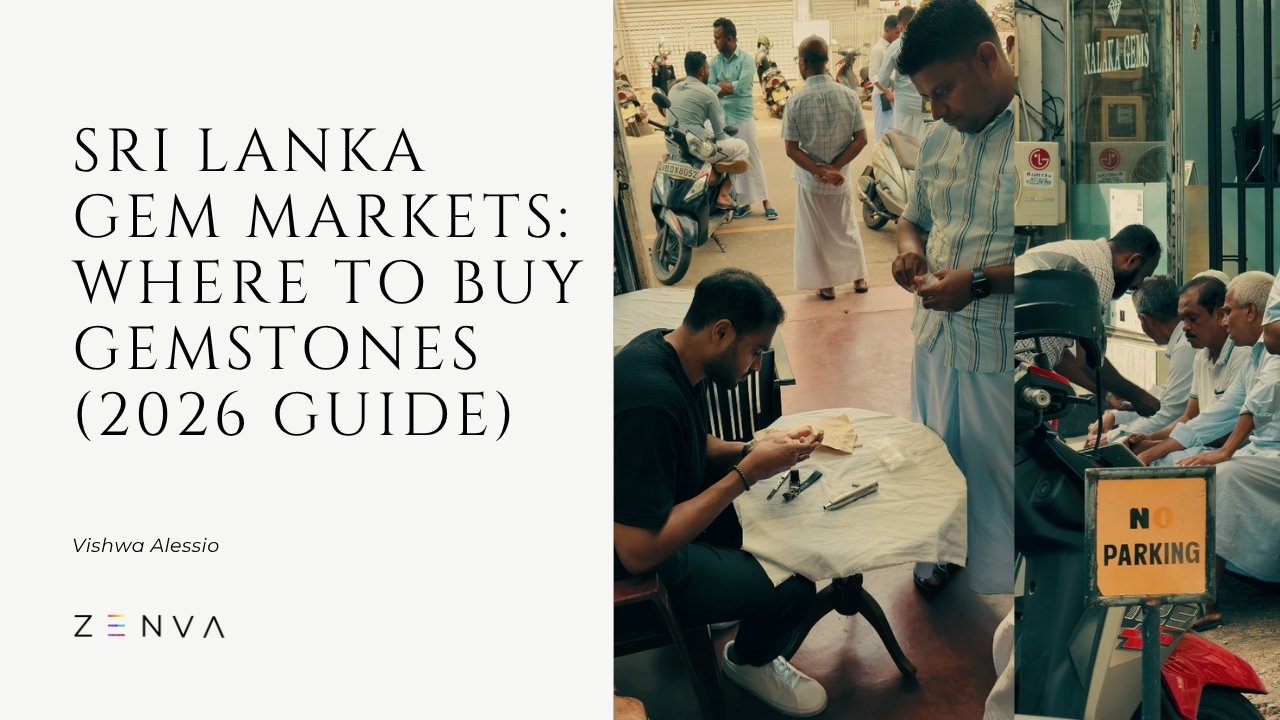
Most gemstones in Sri Lanka are bought and sold at open-air gem markets, not in shops. Miners, brokers, cutters and dealers meet at these markets every day, and a single sapphire can change hands several times before it is exported.
Sri Lanka (Ceylon) is one of the world’s most important gem-producing countries. An estimated 25% of the island is potentially gem-bearing, and more than 75 gem varieties are found here, including sapphire, alexandrite, spinel, garnet and zircon.
We visit these markets every week to source stones for our clients. This guide covers the eight markets we know best: when they open, what you can buy there, and what to watch out for.
Sri Lanka gem markets at a glance
| Market | Location | Opening hours | Type | Best for |
|---|---|---|---|---|
| Demuwatha (Council Avenue) | Ratnapura | 10:00 am – 2:00 pm daily | Cut and polished | Certified sapphires and spinels |
| Clock Tower (Oralosu Kanuwa) | Ratnapura | 7:00 – 10:00 am daily | Rough | Experienced rough buyers |
| Ambagaha Yata | Ratnapura | 10:00 am – 1:00 pm daily | Rough | Small rough and semi-precious parcels; beginners |
| Nivithigala | 20 min from Ratnapura | 7:00 – 10:00 am daily | Rough | Widest variety of Sri Lankan rough |
| Haraniyawaka | Panadura–Ratnapura road | 7:00 – 10:00 am daily | Rough | Fast-moving rough trade |
| Elahera | Matale District, near Dambulla | 7:00 – 10:00 am and 4:00 – 6:00 pm daily | Rough | Large sapphires, geuda, garnet |
| China Fort | Beruwala | 09:00 – 3:00 pm, closed Fridays | Cut and polished | International buyers; widest selection |
| Gintota | Galle | 11:00 am – 5:00 pm daily | Cut and polished | Semi-precious stones; combining with a beach trip |
Rough markets suit buyers who can judge uncut stones. If you are new to gems, start at a cut and polished market, where you can usually pay after the stone is certified.
1. Ratnapura: the gem capital of Sri Lanka
Ratnapura (also spelled Rathnapura) is the centre of Sri Lanka’s gem trade and runs three daily markets. The name means “city of gems”, and the surrounding mines have produced some of the island’s most valuable sapphires for centuries.
The city is about 2.5 hours from Colombo by road. Many foreign buyers come not only to buy, but also to visit gem pits, watch stones being cut, and see how heat treatment is done.
Demuwatha (Council Avenue) gem market
Daily, 10:00 am – 2:00 pm · Cut and polished
Demuwatha is a street lined with gem offices in the heart of Ratnapura. Trading happens both on the street and inside the offices.
You will find sapphires, spinels, chrysoberyl and garnets, and sometimes imported stones from Madagascar and Tanzania. The big advantage here: if you come through a broker based at the market, you can usually take a stone for certification and pay once the report comes back.
Clock Tower gem market (Oralosu Kanuwa)
Daily, 7:00 – 10:00 am · Rough
This open-air rough market gathers around the Clock Tower roundabout every morning. Expect rough sapphire, chrysoberyl, garnet and crystal material.
Deals close fast. Only buy here if you can judge rough confidently: colour zoning, cracks, silk, and how much weight the stone will keep after cutting.
Ambagaha Yata gem market
Daily, 10:00 am – 1:00 pm · Rough
Ambagaha Yata (“under the mango tree”, also written Abagaha Yata or Abagahamula) sits near Zaviya Mawatha in central Ratnapura. Buyers sit at umbrella tables while sellers walk around showing their stones.
It is known for smaller rough stones and mixed semi-precious parcels. That makes it a good place for beginners: you can buy small parcels at fair prices and use them to learn how to identify different gem varieties.
2. Nivithigala gem market
Daily, 7:00 – 10:00 am · Rough
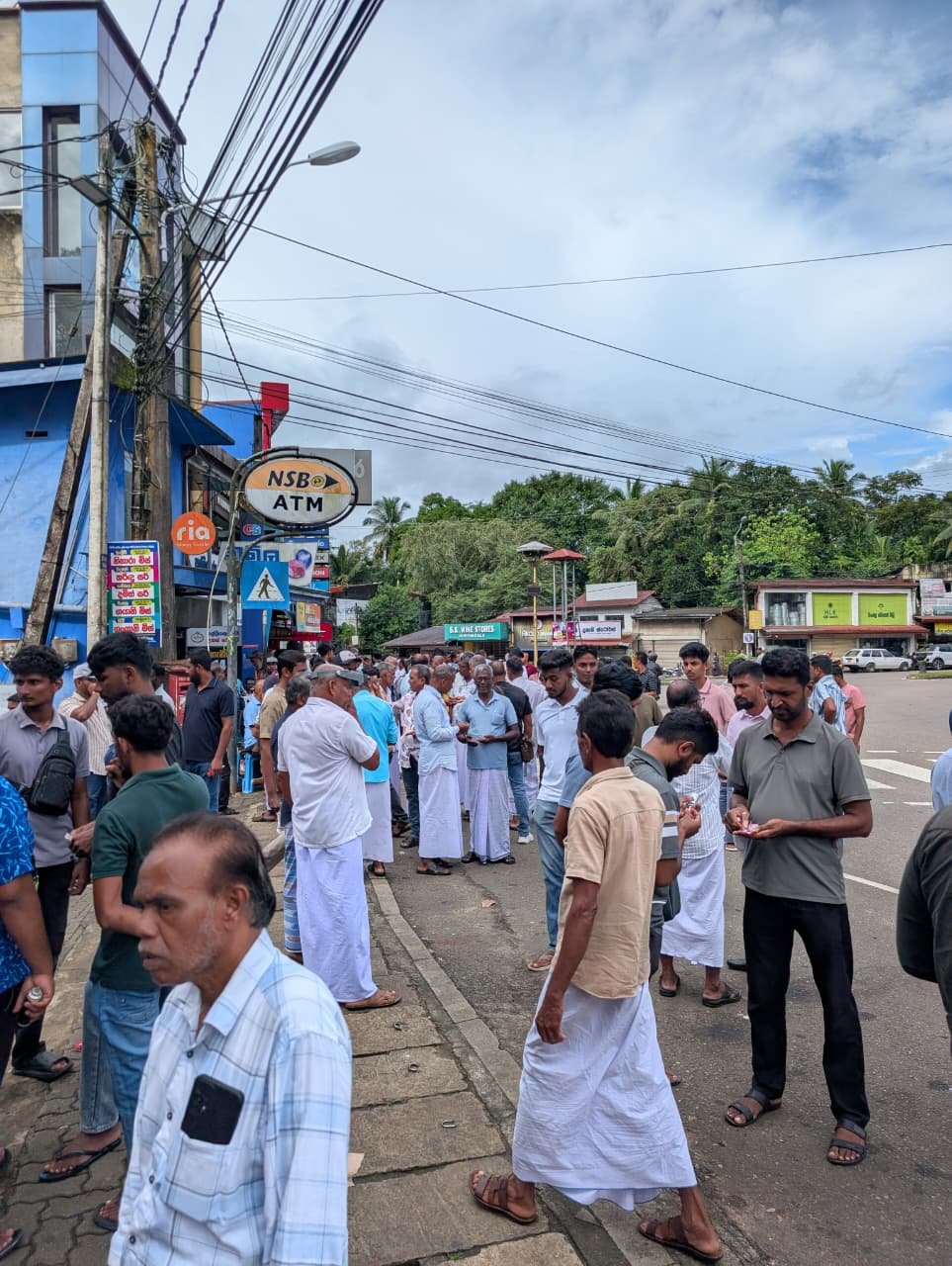
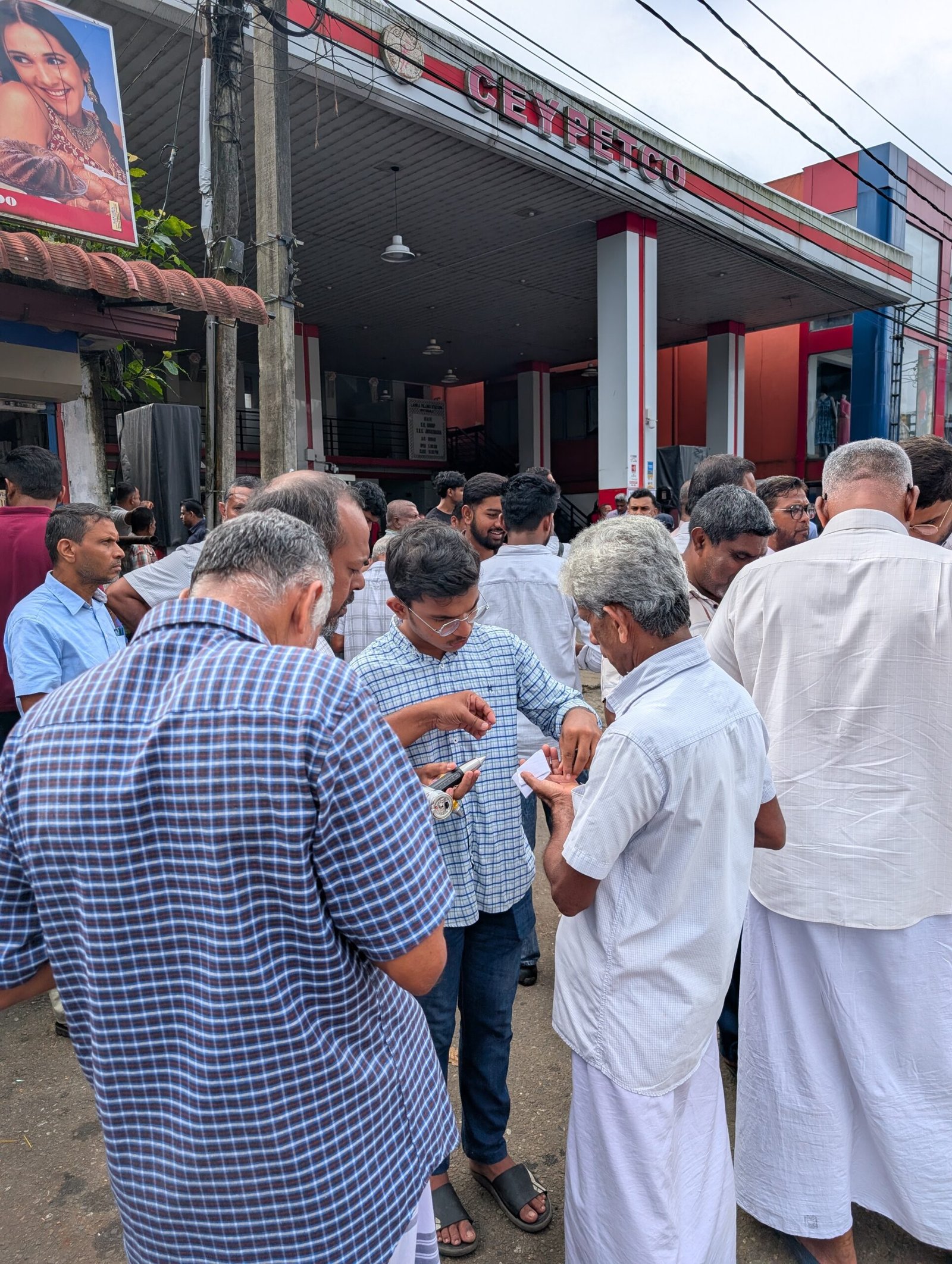
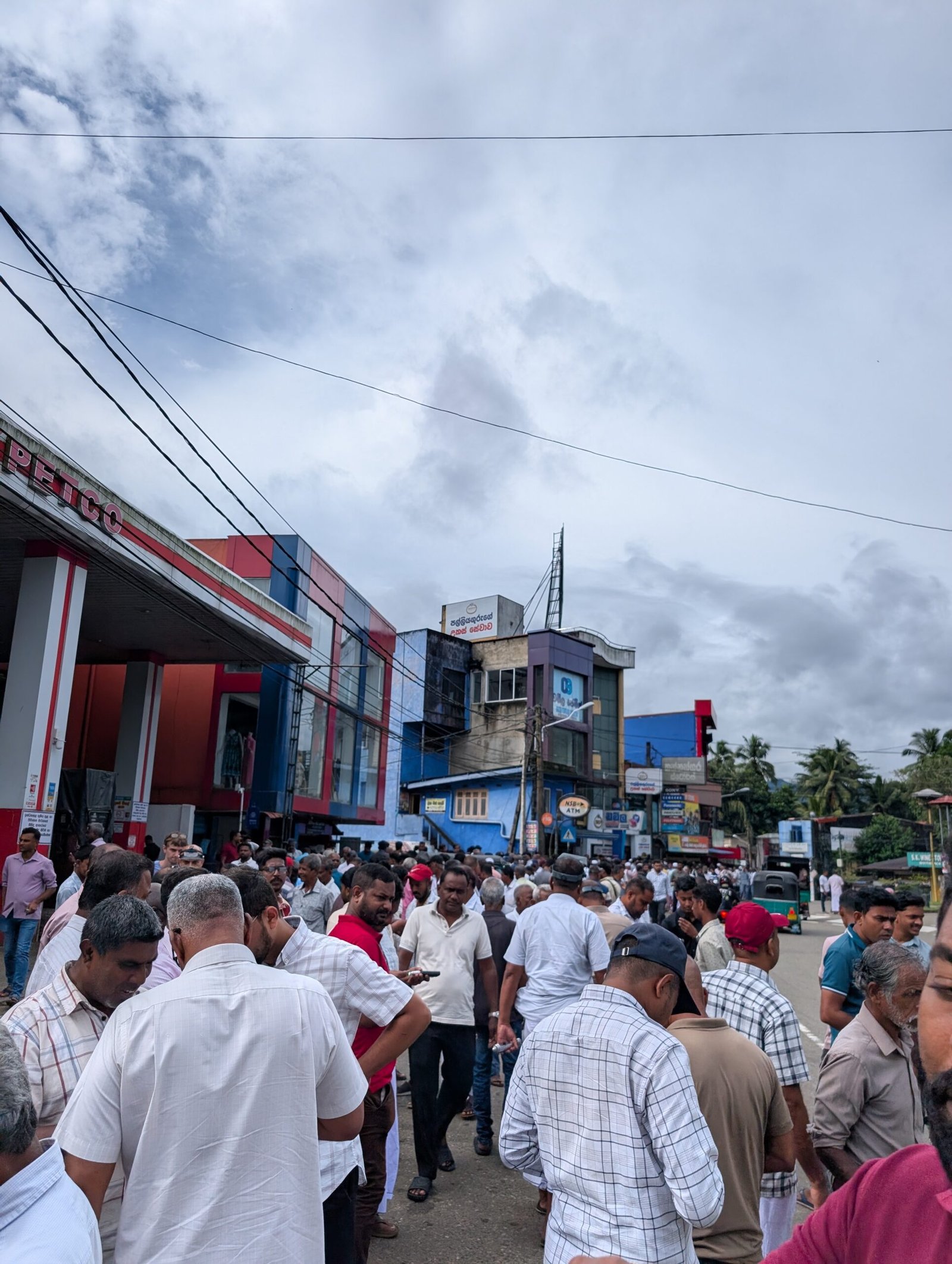
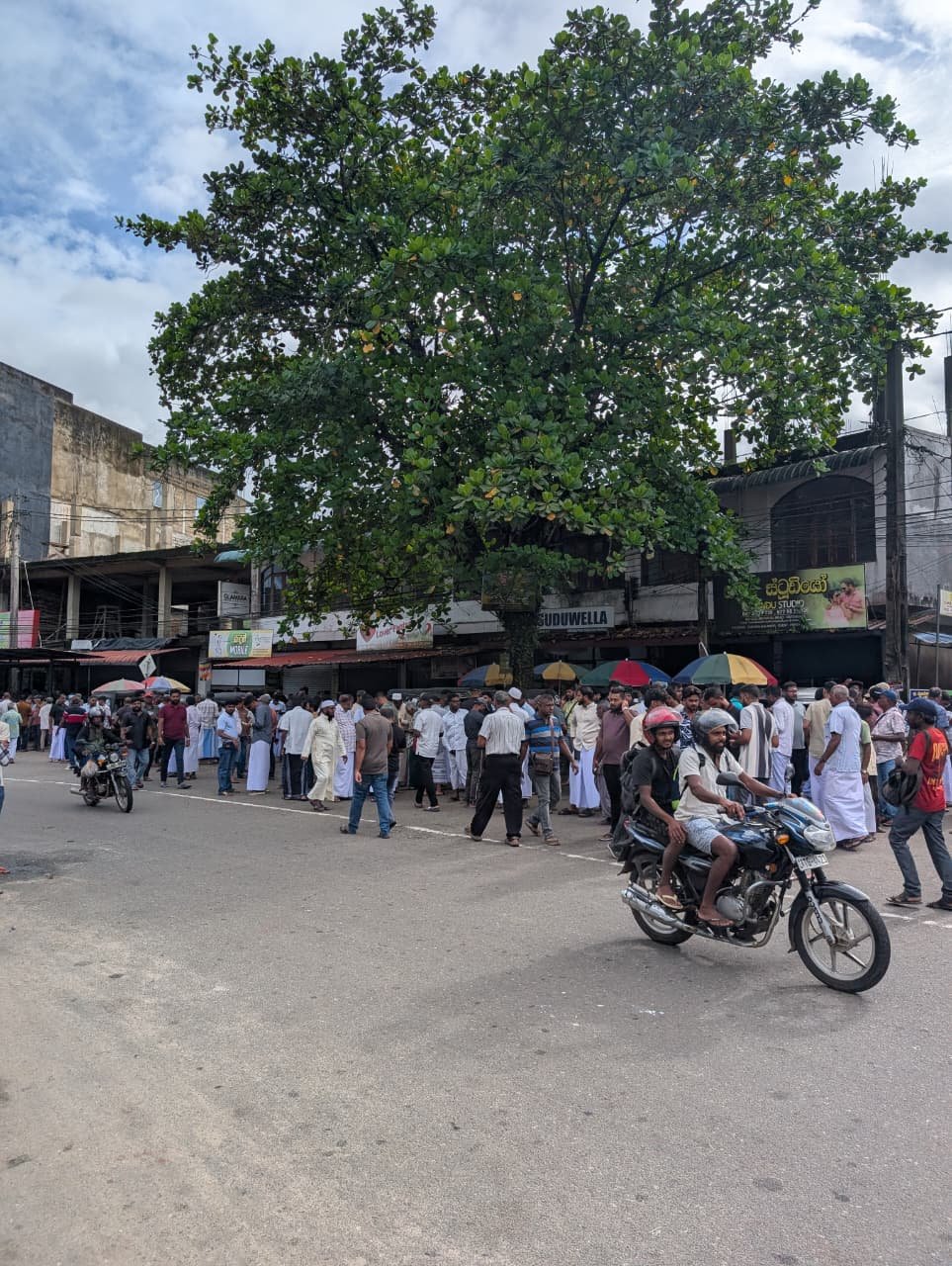
Nivithigala (also spelled Niwitigala) is one of the largest rough gem markets in Sri Lanka. Hundreds of buyers and sellers gather here every morning, and you can find almost every variety of rough the island produces.
The town is about 20 minutes from Ratnapura, with buses running all day. Dealers bring stones here from mining villages and from smaller evening markets nearby, such as Marapana and Karawita.
On a recent visit, a single random parcel held sapphire, spinel, garnet, chrysoberyl and zircon together. To buy well here, you need to judge variety, clarity, colour distribution and likely weight after cutting, and you need to know current prices before you make an offer.
3. Haraniyawaka gem market
Daily, 7:00 – 10:00 am · Rough
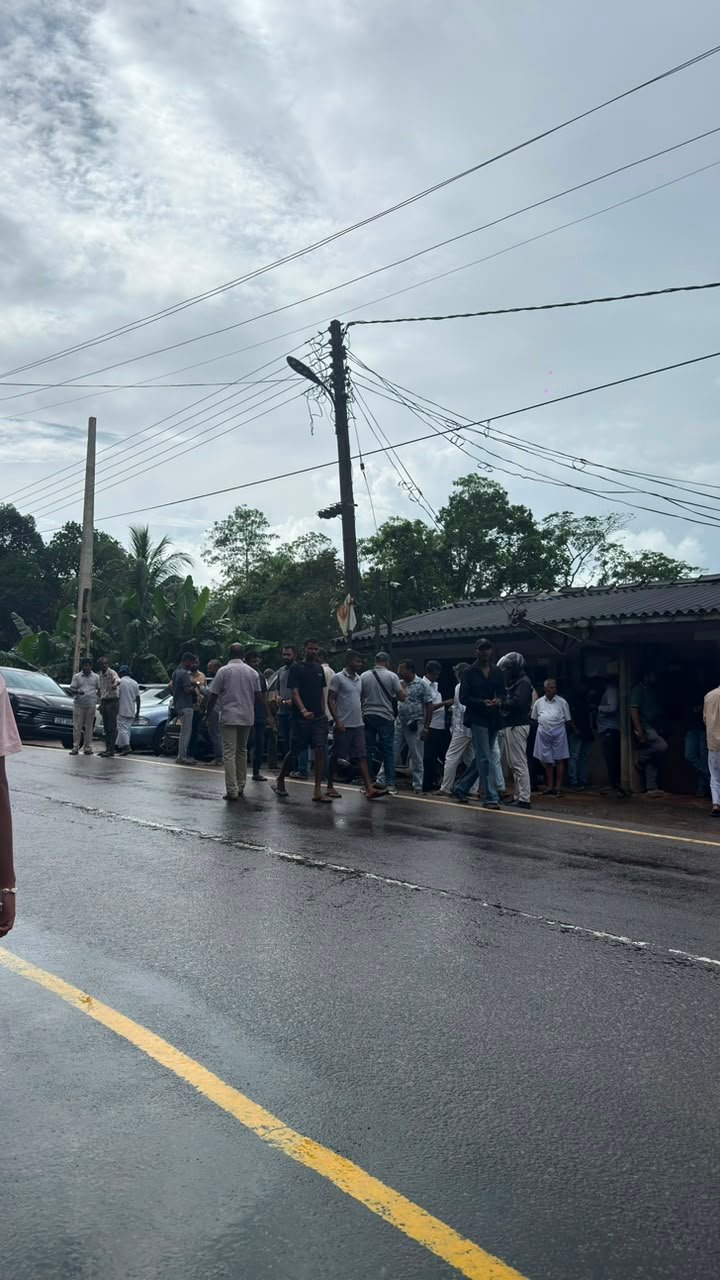
Haraniyawaka (sometimes written Haraniyaka) is on the Panadura–Ratnapura road, about 40 minutes from Ratnapura city. It works much like Nivithigala but is smaller and moves even faster.
Stones arrive from nearby mining areas such as Kiriella, Dimiyawa and Radella. Public buses run all day.
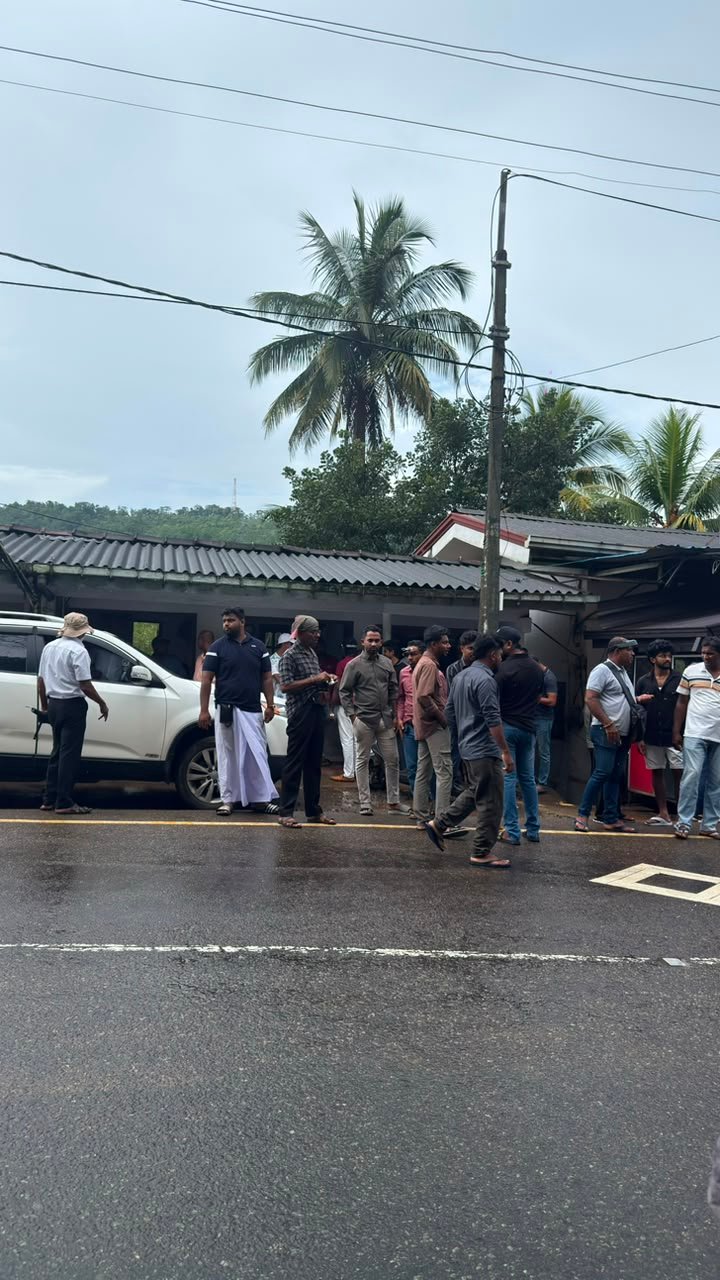
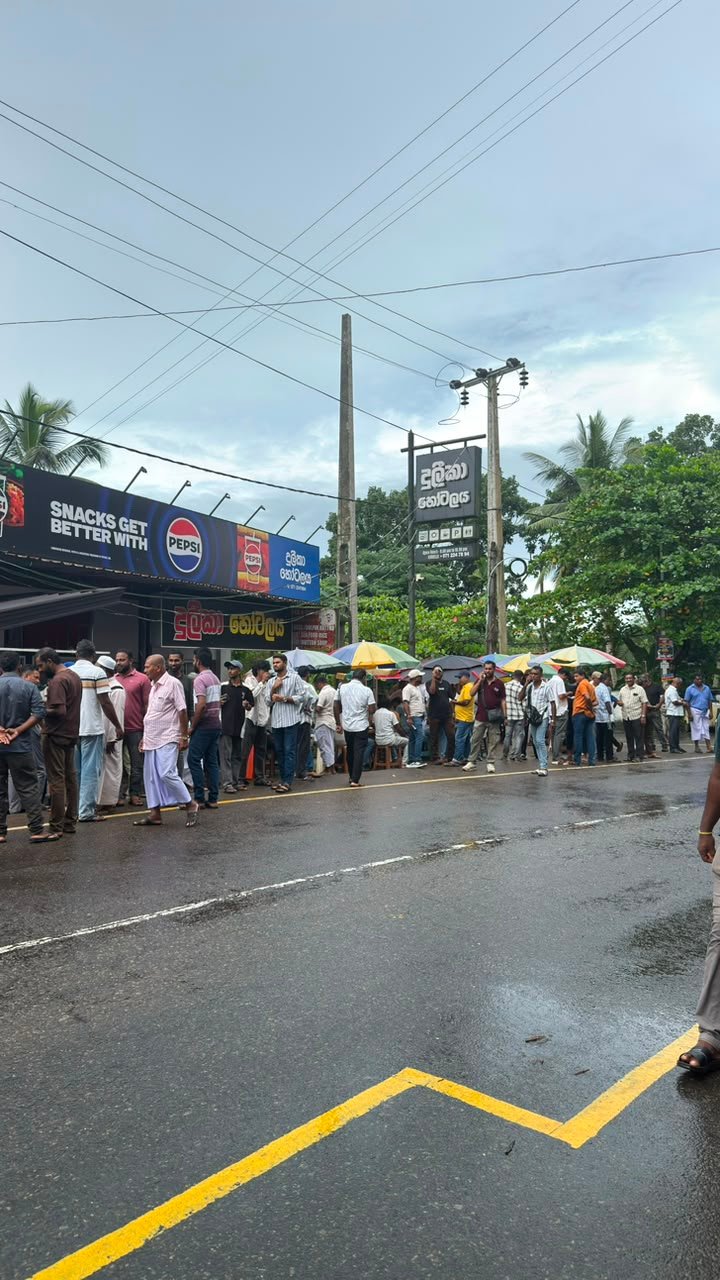
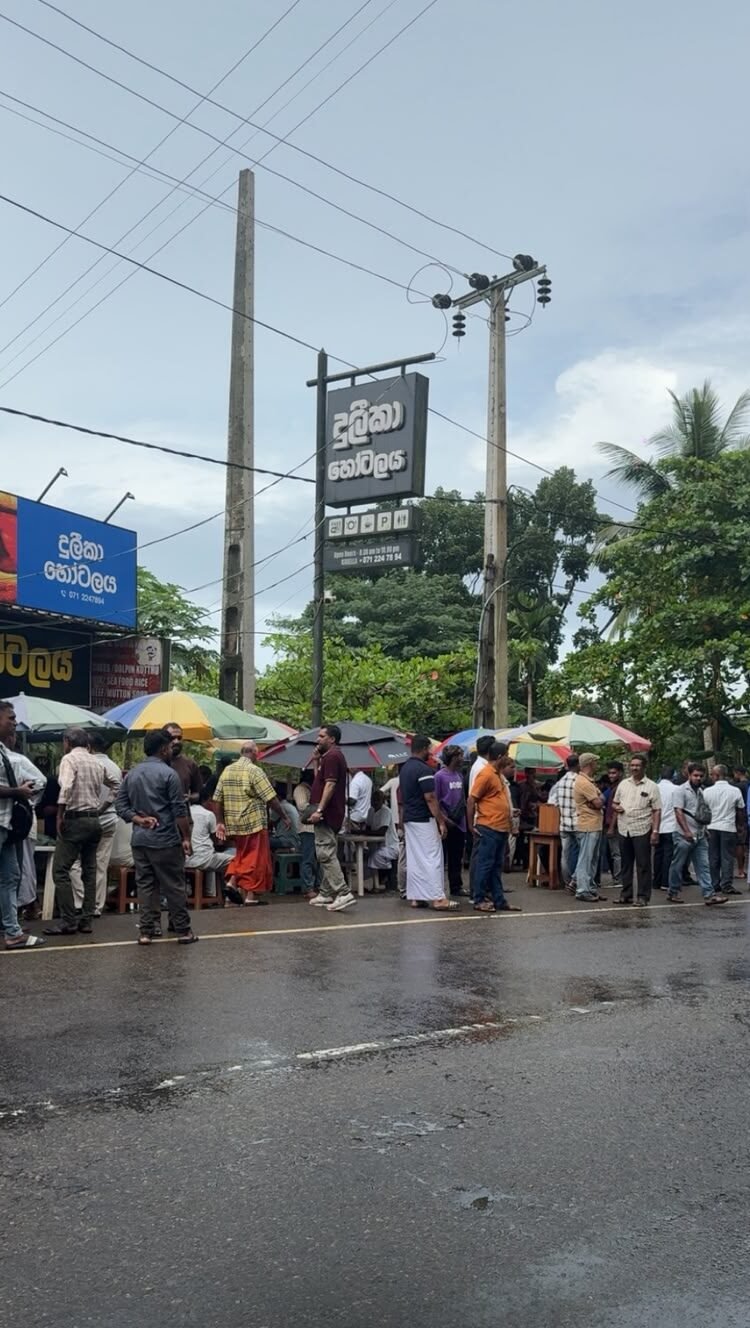
4. Elahera gem market (Matale District)
Daily, 7:00 – 10:00 am and 4:00 – 6:00 pm · Rough
Elahera is one of Sri Lanka’s major gem deposits outside the Ratnapura region. It is known for large sapphires, geuda (the milky sapphire rough that is heat-treated to blue) and garnets, and you will see large-scale machine mining in the area.
The market is about 4 hours from Colombo and 50 minutes from Dambulla. Public transport is limited, so plan to hire a driver.
5. Beruwala: China Fort gem market
Daily, 9:00 am – 3:00 pm, closed Fridays · Cut and polished
China Fort in Beruwala is one of the largest cut and polished gem markets in Sri Lanka, and the one most international buyers visit. Its history goes back to the 8th–10th centuries, when Arab, Moorish and Somali traders called at the port and bought gemstones.
Today you will find almost every Sri Lankan variety, plus imported stones from Africa and Asia. As in Demuwatha, buyers can usually pay after certification. Beruwala is on the coast south of Colombo and easy to reach by train or bus.
6. Gintota gem market (Galle)
Daily, 11:00 am – 5:00 pm · Cut and polished
Gintota is about 15 minutes from Galle town and 2 hours from Colombo. It specialises in semi-precious stones: garnet, quartz, spinel and chrysoberyl.
It is the easiest market to combine with a holiday, since Galle Fort and the southern beaches are right next door.
How to buy safely at Sri Lankan gem markets
- Pay after certification at cut and polished markets. This is standard practice at Demuwatha and China Fort, and it is the best protection against synthetics, glass and undisclosed treatments.
- Don’t buy rough without experience. Rough markets move fast, and stones can be oiled, coloured or misrepresented. Go with someone who knows rough, or learn on small parcels first.
- Know the price before you arrive. Check current prices for the variety and size you want, and make your own offer. Never let a seller set the anchor price.
- Use a trusted local broker. A broker who works at the market knows the sellers and can arrange pay-after-certification terms.
- Get an invoice and a certificate. You will need both to export the stone and to resell it later.
Rules for foreign buyers
Tourists can buy gemstones for personal use. Trading gems commercially in Sri Lanka requires a licence from the National Gem and Jewellery Authority (NGJA), and the authorities have raised concerns about foreigners trading at Ratnapura and China Fort on visit visas. Buying through an NGJA-licensed dealer keeps you on the right side of the rules and makes export paperwork straightforward.
Frequently asked questions
Which is the biggest gem market in Sri Lanka?
Ratnapura’s markets and Nivithigala handle the most rough trade. China Fort in Beruwala is the largest market for cut and polished stones.
What is the best gem market for beginners?
A cut and polished market such as China Fort or Demuwatha, where you can pay after certification. For learning rough, Ambagaha Yata’s small parcels are a good start.
Can foreigners buy gems at Sri Lankan gem markets?
Yes, for personal use. Commercial trading needs an NGJA licence, so serious buyers usually work through a licensed local dealer.
What time do Sri Lankan gem markets open?
Rough markets run early, roughly 7:00 to 10:00 am. Cut and polished markets open around midday. China Fort is closed on Fridays.
Do I need a certificate when buying gems in Sri Lanka?
For any stone of real value, yes. A lab certificate confirms the stone is natural and states any treatment, such as heating.
Conclusion
Sri Lanka’s gem markets are among the most open in the world: anyone can walk in and watch miners, brokers and dealers trade. That openness creates competition and fair prices, and it supports thousands of families along a long supply chain.
The same openness carries risk. Pay after certification at cut and polished markets, and only buy rough if you have the experience to judge it.
Visit the markets with us, or buy without travelling
We run guided gem market and gem mining tours in Ratnapura and Beruwala (China Fort). Message us on WhatsApp to plan your trip.
Can’t travel to Sri Lanka? Browse our certified Ceylon sapphires and spinels, or register for B2B access to see our full wholesale collection.